Music as Black History: Kids Books for Black History Month
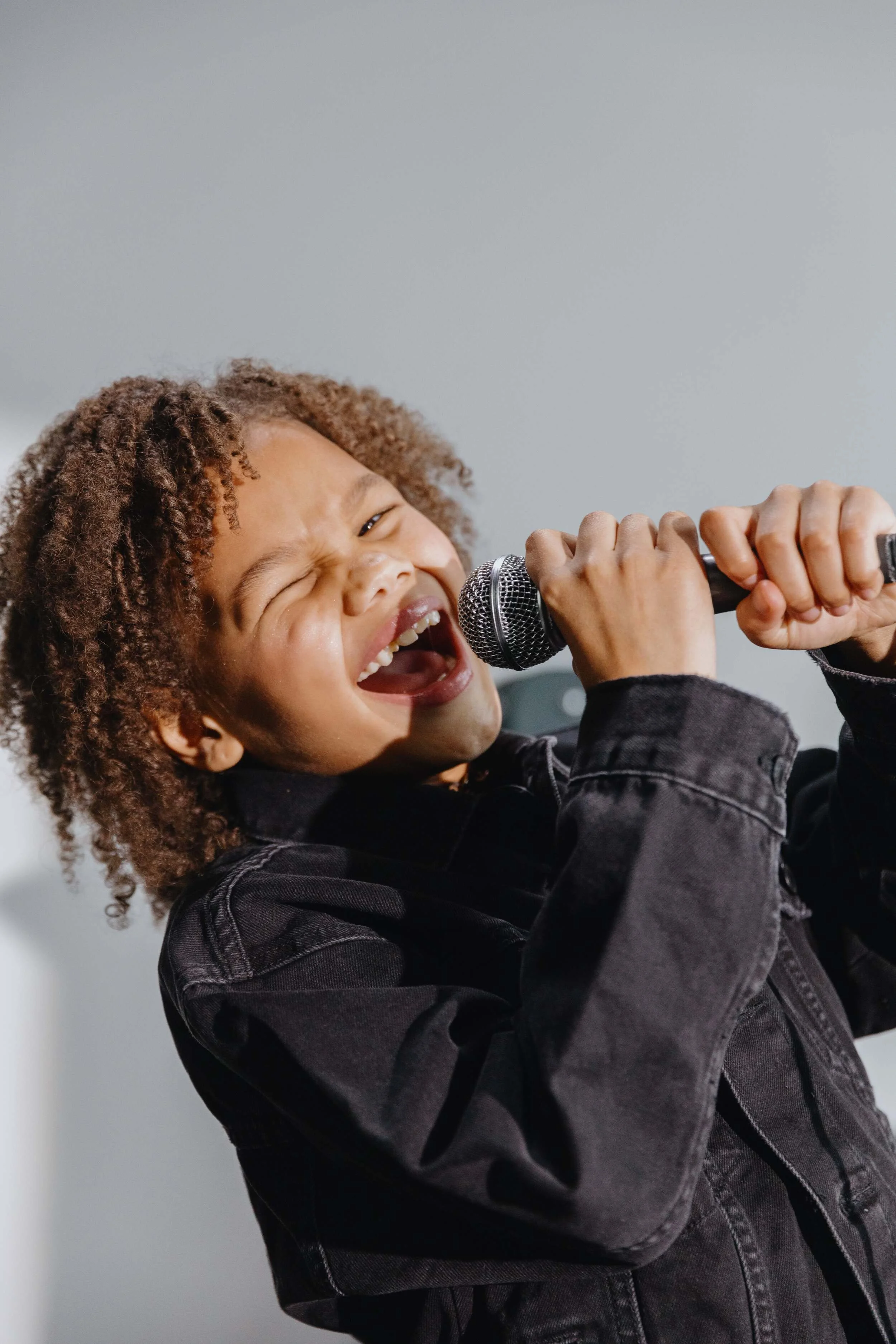
Black History Month provides a continued and specific opportunity to focus on the importance of Black lives and Black cultures in America. Kids’ books for Black History Month allow us to explore black history at a child’s level. One of the farthest-reaching contributions of Black Americans has been through music. Music is so infused in our everyday lives with apps like Spotify and YouTube that you only have to search for a song and hear it played from every corner of the globe.
Many people, from the Smithsonian’s Steven Lewis to music journalist and podcast host Sidney Madden, have posited without Black music, there would be no American music. This influence started in African musical heritage and was brought with enslaved people. It mixed with European and Native American musical cultures to produce wide varieties from ragtime to blues, jazz to hip-hop, and many other genres.
Music is often used as a backdrop to activism and has a long history of revealing social injustice and oppression. However, music and books are similar in more ways than just this. They both explore, portray, and allow you to experience something outside yourself.
We wanted to honor some of our favorite musicians, fantastic African-American female singers who were activists in their own right.
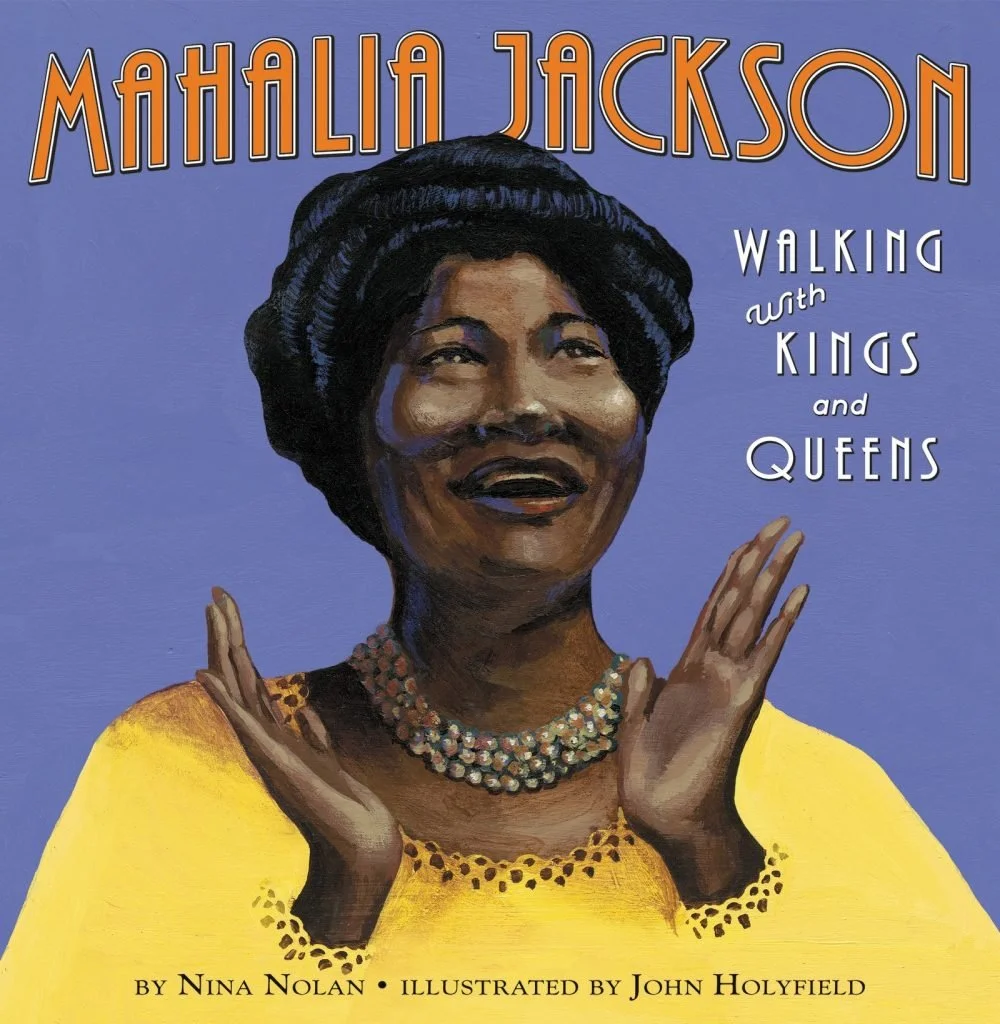
Written by Nina Nolan, Illustrated by John Holyfield
A biography of Mahalia Jackson, who loved Gospel music even as a child. After her mother died, she had to live with her strict aunt. However, gospel music made her difficult childhood more bearable and made her feel closer to God. With her fantastic voice, she took herself from the poor streets of New Orleans to Chicago and to the March on Washington to help Martin Luther King, Jr. give his I Have a Dream speech. This book is full of beautiful paintings portraying Mahalia Jackson throughout her life.
ages 4-8; Early Readers
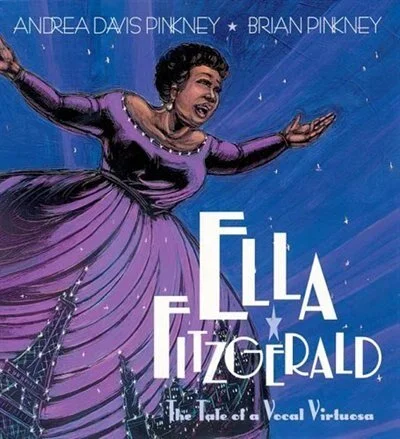
Written by Andrea Davis Pinkney, Illustrated by Brian Pinkney
This clever book is divided as if listening to an Ella Fitzgerald album with creative titles like “Hoofin in Harlem” or “Stompin at the Savoy.” Scat Cat Monroe (an actual cat narrator) tells Ella’s life rhythmically, from her early life singing on street corners in Yonkers to breaking racial barriers to her legendary performance with Dizzy Gillespie at Carnegie Hall. To create these beautiful scratchboard illustrations, start with a whiteboard covered in black ink, then use sharp tools to scratch away the ink to expose the whiteboard underneath, adding the color last by tinting with dyes, then painting on top with acrylic paint.
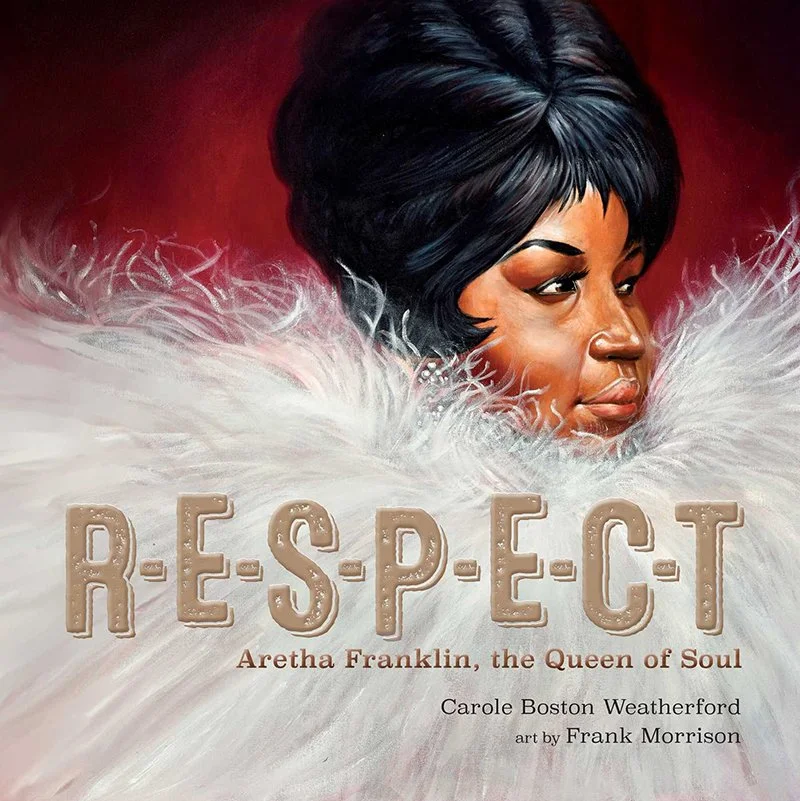
Written by Carole Boston Weatherford, Art by Frank Morrison
Spelled-out titles on each page begin the rhyming couplets about Aretha Franklin’s life. Starting with B-L-E-S-S-E-D, little Aretha says her prayers in Memphis, TN, through her family’s move to Detroit, MI, and her parents’ eventual divorce. The vibrant oil paintings illustrating Aretha’s rise to fame and involvement in the Civil Rights movement celebrate her life rather than offer an in-depth biography.
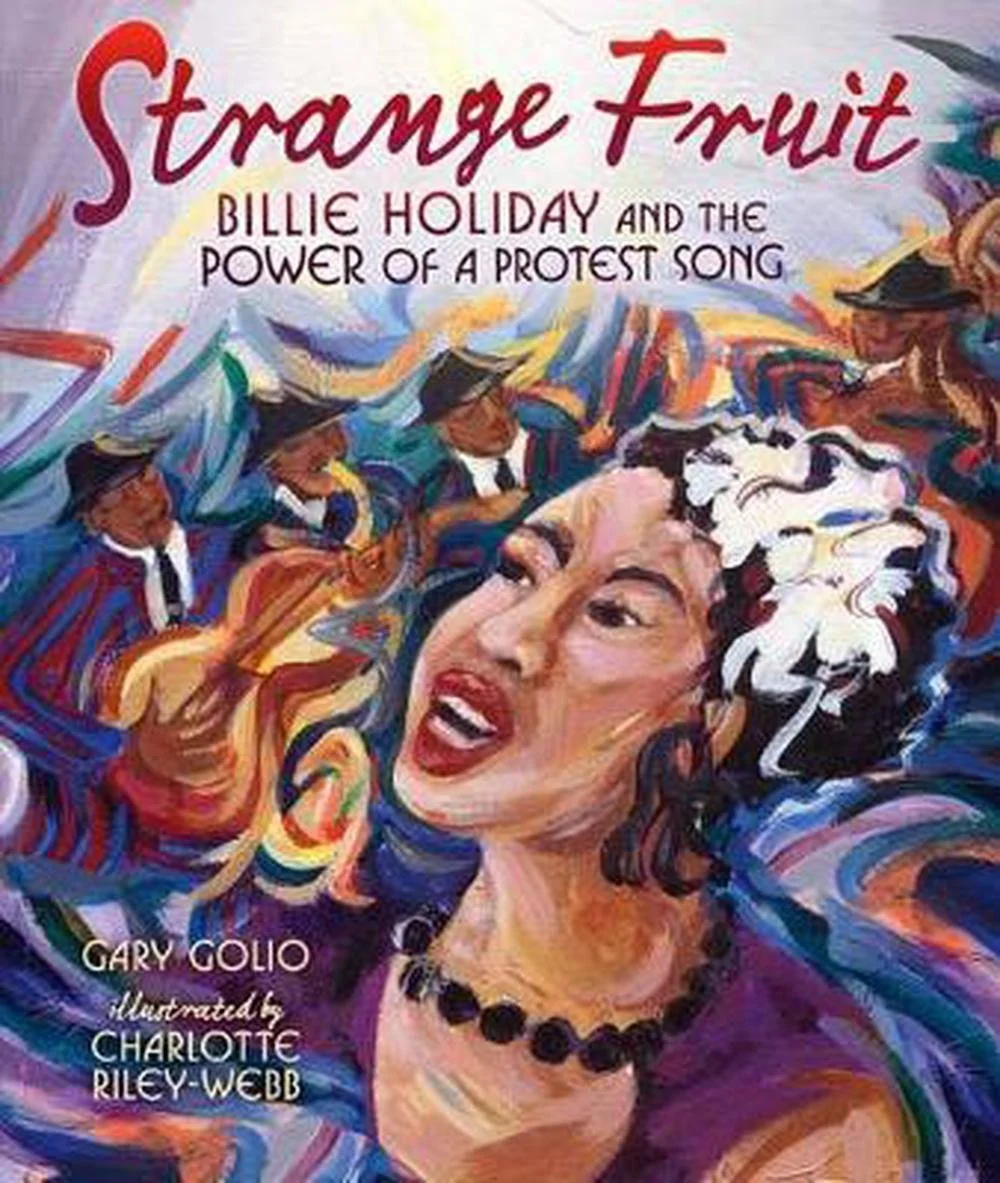
Written by Gary Golio, Illustrated by Charlotte Riley-Webb
Let me start with because of the very nature of this song; this book is for older, more mature children and requires a parent willing to talk about hate and racism at its worst.
The story of Billie Holiday and her battles with racism, systemic and personal. Opening with Billie’s battles in clubs like The Blue Room at Hotel Lincoln in New York City, where she wasn’t allowed to talk to customers or even walk through the hotel because they didn’t want white people to think a black person was staying at the hotel. Her mounting anger with a system treating her as less than human, a son of Jewish immigrants, high school teacher Abel Meeropol, wrote a song about lynching called “Strange Fruit” and wanted her to sing it. She eventually did, despite her original hesitation about it not being one of her genres. It was incredibly moving to those open to hearing the message within the song. But, unfortunately, others cursed, threatened, and assaulted Billie for singing “that song.” The illustrations in this book were done with acrylic paint and tissue collage on canvas, leading to a gorgeously textured depth. Each illustration has movement, sound, and emotions that add to the story’s importance.
Ages 8-12